
 admin
admin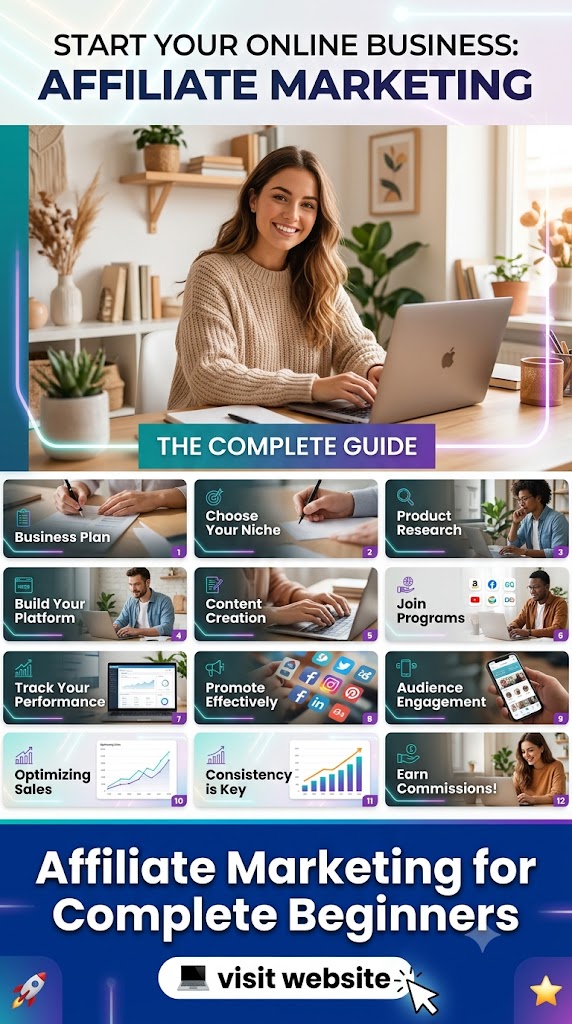
Your 2026 Guide to Turning Passion into Profit
Affiliate marketing has become a multi-billion dollar industry, and for good reason. It offers one of the most accessible ways to earn money online without the need to create a product, hold inventory, or provide customer service . By 2026, the industry is projected to be worth over $12 billion globally, and 47% of brands are planning to increase their spending on affiliate programs . This guide is your complete roadmap to understanding what affiliate marketing is, how it works, and exactly how you can get started on the path to earning your first commissions.
Chapter 1: What is Affiliate Marketing?
At its core, affiliate marketing is a performance-based marketing strategy where an individual (the affiliate) earns a commission for promoting another company’s (the merchant’s) products or services . In simpler terms, it’s like a digital referral system. When someone makes a purchase through your unique affiliate link, you get paid a percentage of the sale.
Think of it this way: you’re probably already doing this informally. When you recommend a great restaurant to a friend or tell a colleague about a new productivity app, you are influencing their purchasing decisions. Affiliate marketing is the formal, trackable, and income-generating version of this natural human behavior .
The Four Key Players
The affiliate marketing ecosystem is built on four interdependent pillars :
- The Merchant (Brand/Retailer): This is the company that creates the product or service. They can be a giant like Amazon, a boutique software creator, or any business that wants to expand its reach by paying for performance rather than upfront advertising costs.
- The Affiliate (You): You are the bridge between the merchant and the consumer. Your role is to promote the merchant’s products to your audience through content you create, such as blog posts, videos, or social media updates. Your success depends on building trust and driving conversions.
- The Consumer (Your Audience): This is the person who clicks on your affiliate link and makes a purchase. They hold the ultimate power; if they don’t trust your recommendation, they won’t buy. Respecting and nurturing this relationship is the key to long-term success.
- The Affiliate Network: While not always required, networks like ShareASale, CJ Affiliate, and Awin act as intermediaries. They provide a platform that connects affiliates with merchants, handling complex tasks like tracking clicks, managing reporting, and processing payments .
How Does It Work? The 5-Step Process
The process is straightforward :
- You join an affiliate program for a product or brand you want to promote.
- You receive a unique tracking link (an affiliate link).
- You share this link in your content (a blog post, video, or social media caption).
- A member of your audience clicks the link and completes a qualifying purchase on the merchant’s site.
- The merchant’s tracking system credits you for the sale, and you receive a commission.
The Commission Models
Affiliates are compensated in a few different ways. The most common models are :
- Pay-Per-Sale (PPS): The most common model. You earn a commission (usually a percentage of the sale price) only when a customer makes a purchase. Commission rates often range from 1% to 50% .
- Pay-Per-Lead (PPL): You earn a commission when a referred visitor completes a specific action, such as signing up for a free trial, filling out a contact form, or subscribing to a newsletter. This is common for SaaS, finance, and education companies .
- Pay-Per-Click (PPC): You are paid for every visitor you redirect to the merchant’s website, regardless of whether they buy anything. This model is less common today due to higher risk for merchants .
Chapter 2: Why Affiliate Marketing is Perfect for Beginners
Affiliate marketing is an attractive starting point for several reasons :
- Low Financial Risk: You don’t need to invest in product creation, inventory, or shipping. Most programs are free to join, so you can start earning money online with virtually no upfront cost .
- Passive Income Potential: Once you’ve created content like a blog post or a YouTube video, it can continue to work for you 24/7. A reader might discover an article you wrote six months ago, click your link, and generate a commission while you sleep .
- High Earning Potential: While it takes time and effort, affiliate marketing can be highly profitable. Some niche sectors, like personal finance and education, offer commissions as high as 50% or more, and some independent marketers build full-time careers from it .
- Flexibility and Freedom: You can work from anywhere with an internet connection, set your own hours, and choose the products you promote. It’s a perfect side hustle or a path to a full-time digital business .
Chapter 3: A Step-by-Step Guide to Starting From Zero
Feeling ready to get started? This step-by-step guide will walk you through the entire process.
Step 1: Choose Your Niche
Your niche is the specific topic or industry you will focus on. This is the most critical decision you’ll make because it determines everything from the content you create to the partnerships you build .
A good niche should be a sweet spot between your passion, your expertise, and market demand (including monetization potential) .
- Passion: You’ll be creating content about this topic for months or years. Choose something you genuinely enjoy discussing, learning about, and researching. Can you talk about this for hours without getting bored? .
- Expertise: You don’t need to be a world-renowned expert, but having existing knowledge or a strong interest in learning about the topic will give you a significant advantage. Think about your profession, hobbies, or life experiences .
- Profitability: Is there a market for this niche? Are people actively searching for and buying products in this space? Competition is a good sign that there’s money to be made .
High-Performing Niches (with potential commission rates):
- Personal Finance: Highly lucrative, with commissions reaching 50% for financial services and tools .
- Health & Fitness: A consistently popular niche with commission rates of 3-20% .
- Digital Marketing & Software: Often features recurring commissions (the “holy grail”) of 30% or more for subscription products .
- Technology & Gadgets: Broad appeal with commissions of 1-20% .
- Travel, Education, and Luxury Retail: These niches often have high-value products, meaning a single sale can yield a substantial commission (e.g., £50-£200 per sale for luxury items) .
Step 2: Choose Your Platform
Your platform is your digital real estate—where you’ll build your audience and share your content. You don’t need to be everywhere; it’s better to start with one or two platforms and excel there .
Step 3: Find and Join Affiliate Programs
Once you have a niche and a platform, you need products to promote. You can find affiliate programs in several ways :
- Directly with Brands: If there’s a company you love and already use, visit their website and look for a “Partners,” “Affiliates,” or “Referral Program” link in the footer.
- Affiliate Networks: These are marketplaces that connect you with thousands of merchants. They offer a wide variety of products and handle the technical aspects for you.
- ShareASale: Great for a wide range of niches, including fashion, home goods, and more.
- CJ Affiliate (formerly Commission Junction): Often features larger retail, tech, and travel brands.
- Awin: A major network, particularly strong in European markets.
- ClickBank: Specializes in digital products (e-books, online courses) and offers high commissions (often up to 75%).
- Marketplace Programs: A few massive marketplaces have their own programs.
Pro-Tip: Start with one or two programs that align perfectly with your niche. Don’t try to promote everything under the sun. Focus your efforts to get over the payment threshold so you can see your first tangible earnings .
Step 4: Create Valuable and Honest Content
This is the most important step. Your success hinges on the trust you build with your audience. If you don’t provide value, they won’t click your links or make purchases .
High-Converting Content Types:
- In-Depth Product Reviews: Don’t just rehash manufacturer specs. Share your real-world experience, honest pros and cons, and who the product is best for .
- Comparison Articles (“Product A vs. Product B”): Help readers make informed decisions. Position yourself as an unbiased authority by comparing features, pricing, and use cases.
- Tutorials and How-To Guides: Teach your audience valuable skills and naturally recommend affiliate products as part of the solution. For example, a guide on “How to Start a Blog” is a perfect place to recommend a hosting provider .
- Problem-Solution Content: Start by identifying a common pain point your audience has, then introduce your affiliate product as a solution .
- Seasonal and Gift Guides: Capitalize on holidays, seasonal trends, and consumer events by creating gift guides and trend analyses .
The Authenticity Advantage:
- Lead with Value: Every piece of content should solve a problem or answer a question for your audience .
- Be Honest: Don’t promote a product just because it offers a high commission. Recommend products you genuinely believe in and would use yourself. Your audience will see through inauthentic recommendations .
- Use a “Problem-First” Approach: Frame your promotional content around a real problem your audience faces, then introduce the product as a potential solution .
Step 5: Build an Audience and Drive Traffic
Your content is useless if no one sees it. You need a strategy to drive traffic to your platform .
- Search Engine Optimization (SEO): For bloggers, this is the most powerful long-term strategy. Research keywords your audience is using and optimize your content to rank higher in search engines like Google.
- Social Media Marketing: For social media creators, consistency is key. Post regularly, engage with your followers, and collaborate with other creators in your niche to tap into new audiences .
- Email Marketing: For everyone, this is a must. Build an email list from day one. It gives you a direct line of communication to your most loyal followers, bypassing social media algorithms .
Step 6: Master the Art of Disclosure
Being transparent about your affiliate relationships is not only a legal requirement in many countries (like the US and UK), but it’s also a trust-building opportunity .
- Be Obvious: Your disclosure should be clear, visible, and easy to find. Don’t hide it in a small font in the footer.
- Be Honest: Use language that reinforces your integrity. For example: “This post contains affiliate links. I earn a small commission from qualifying purchases at no extra cost to you. I only recommend products I genuinely use and believe in.” .
- Know the Rules: Familiarize yourself with the rules of the Federal Trade Commission (FTC) in the US or the Advertising Standards Authority (ASA) in the UK. Place disclosures near your affiliate links .
Chapter 4: Is Affiliate Marketing for You?
Affiliate marketing is a powerful way to generate income, but it’s not a get-rich-quick scheme. It takes time, effort, and dedication.
It’s a great fit if you:
- Enjoy creating helpful content (writing, making videos, or recording podcasts).
- Are willing to learn new digital marketing skills like SEO and analytics.
- Are patient and can focus on a single niche for several months.
- Want to build a business based on trust and honest recommendations .
It might not be for you if you:
- Are looking for instant income.
- Are unwilling to learn new skills like SEO and content creation.
- Plan to promote products you haven’t researched or used.
- Don’t want to build trust and provide value to an audience .
Final Thoughts: Your Journey Starts Now
Affiliate marketing is a legitimate, proven, and accessible way to build a sustainable online income. While the path is not always easy, the potential for financial freedom, flexibility, and passive income is immense. The best way to start is simply to begin. Choose a niche that excites you, pick a platform, create one piece of valuable content, and take the first step on your affiliate marketing journey.
Frequently Asked Questions
Can you make $10,000 a month with affiliate marketing?
Yes, it is absolutely possible, but it is not a quick or easy path. Reaching this level requires a large, highly engaged audience, a well-executed strategy, and consistent effort over a significant period of time .
How profitable is affiliate marketing?
Profitability varies greatly depending on your niche, the quality of your traffic, and your commission rates. However, because startup costs are low, the potential for high profit margins is significant. Some beginners earn nothing for months, while others build businesses that replace full-time salaries .
How do I start affiliate marketing with no experience?
Start by choosing a niche you’re passionate about and joining a beginner-friendly platform like Amazon Associates. From there, focus on creating high-quality content that provides genuine value to your audience and learn the basics of SEO and social media marketing .
What exactly does an affiliate marketer do on a day-to-day basis?
An affiliate marketer’s daily tasks often include researching products in their niche, creating content (writing blog posts, filming videos), promoting that content to drive traffic, analyzing performance data to understand what works, and engaging with their audience to build trust .