 admin
adminomprehensive Guide to Personal Finance Success
Personal finance is often misunderstood as a complex web of mathematical equations and stock market jargon. In reality, it is 80% behavior and only 20% head knowledge. It is the art of managing your resources to live a life of freedom, security, and purpose. Whether you are struggling to pay off student loans, looking to buy your first home, or planning for a comfortable retirement, the principles of wealth-building remain the same.
This guide is designed to be your roadmap. We will dive deep into every facet of personal finance—from the psychological barriers that keep you broke to the advanced investment strategies that create multi-generational wealth.
1. The Psychology of Money: Why You Spend the Way You Do
Before you open a spreadsheet or an investment account, you must understand your “money script.” Our financial decisions are rarely driven by logic alone; they are driven by emotions, upbringing, and societal pressure.
Understanding Your Money Script
Most people fall into one of four categories regarding their views on money:
- Money Avoidance: Believing that money is “dirty” or that they don’t deserve wealth.
- Money Worship: Believing that more money will solve every problem in life.
- Money Status: Equating net worth with self-worth.
- Money Vigilance: Being hyper-aware of savings but often living in fear of losing it all.
The Trap of Lifestyle Creep
Lifestyle creep occurs when your expenses increase as your income rises. You get a $10,000 raise, and suddenly you “need” a more expensive car or a bigger apartment. To build true wealth, you must maintain a “gap” between what you earn and what you spend.
2. Building a Bulletproof Budget
A budget isn’t a cage; it’s a blueprint. It doesn’t tell you that you can’t spend money; it tells you where your money is going instead of you wondering where it went.
The 50/30/20 Rule
If you are new to budgeting, this is the gold standard:
- 50% for Needs: Housing, utilities, groceries, insurance, and minimum debt payments.
- 30% for Wants: Dining out, hobbies, Netflix, and travel.
- 20% for Financial Goals: Debt overpayments, emergency fund, and retirement investing.
Zero-Based Budgeting
For those who want maximum control, zero-based budgeting requires you to assign every single dollar a “job” before the month begins. If you have $4,000 in income, your expenses + savings + debt payments must equal exactly $4,000.
Tools for Success
- YNAB (You Need A Budget): Excellent for proactive planning.
- Mint/Empower: Great for tracking net worth and automated categorization.
- The Spreadsheet Method: Best for those who want manual control and deep customization.
3. The Emergency Fund: Your Financial Insurance Policy
Life is unpredictable. Tires blow out, roofs leak, and layoffs happen. Without an emergency fund, these inconveniences become financial disasters that force you into high-interest debt.
How Much Do You Really Need?
- The Starter Fund: If you are in debt, aim for $1,000 to $2,000 immediately. This covers the small “hiccups.”
- The Fully Funded Account: Once debt is cleared (excluding the mortgage), aim for 3 to 6 months of essential living expenses. If your monthly bills are $3,000, your goal is $9,000 to $18,000.
Where to Keep It
Do not put your emergency fund in the stock market or a regular checking account. Use a High-Yield Savings Account (HYSA). These accounts currently offer much higher interest rates than traditional banks, ensuring your money keeps up with inflation while remaining liquid and accessible.
4. Crushing Debt: Strategies to Reclaim Your Freedom
Debt is a weight around your neck that prevents you from moving forward. Not all debt is created equal, but all high-interest debt is a financial emergency.
The Debt Snowball vs. The Debt Avalanche
- The Debt Snowball (Psychological Win): List your debts from smallest balance to largest. Pay the minimum on everything except the smallest. When the smallest is gone, move that payment to the next one. This creates “quick wins” that keep you motivated.
- The Debt Avalanche (Mathematical Win): List your debts from highest interest rate to lowest. Pay the minimum on everything except the one with the highest rate. This saves you the most money in interest over time.
Good Debt vs. Bad Debt
- Bad Debt: Credit cards, payday loans, and high-interest car loans. These assets depreciate while the interest accumulates.
- Good Debt: Mortgages or low-interest student loans for high-ROI degrees. These are generally considered “leveraged investments,” though they should still be managed aggressively.
5. Investing for Beginners: Harnessing the Power of Compound Interest
Investing is the process of using your money to buy assets that generate more money. Albert Einstein famously called compound interest the “eighth wonder of the world.”
The Magic of Compounding
If you invest $500 a month starting at age 25 with a 7% annual return, you will have over $1.2 million by age 65. If you wait until age 35 to start, you’ll have only about $580,000. The cost of waiting a decade is over $600,000.
Common Investment Vehicles
- Index Funds: These track a specific market index (like the S&P 500). They are low-cost, diversified, and historically outperform most professional stock pickers.
- ETFs (Exchange Traded Funds): Similar to index funds but traded like individual stocks.
- Individual Stocks: High risk, high reward. Only recommended for a small “play money” portion of your portfolio.
- Bonds: Essentially loans you provide to governments or corporations in exchange for interest. Lower risk than stocks, but lower returns.
Asset Allocation
Your mix of stocks and bonds should depend on your age. A common rule of thumb is “110 minus your age” equals the percentage of your portfolio that should be in stocks.
6. Retirement Accounts: Tax-Advantaged Wealth Building
The government provides specific accounts to encourage people to save for retirement. Understanding these can save you hundreds of thousands of dollars in taxes.
401(k) and 403(b)
These are employer-sponsored plans.
- The Match: If your employer offers a 401(k) match, that is a 100% return on your investment. Never leave this money on the table.
- Traditional vs. Roth: Traditional contributions are pre-tax (lower tax now), while Roth contributions are post-tax (no tax when you withdraw in retirement).
IRA (Individual Retirement Account)
- Traditional IRA: Contributions may be tax-deductible.
- Roth IRA: My personal favorite. You pay tax on the money now, but the growth and withdrawals are completely tax-free. It is a powerful tool for young investors.
HSA (Health Savings Account)
Often called the “Triple Tax-Advantaged” account.
- Contributions are tax-deductible.
- Growth is tax-free.
- Withdrawals for medical expenses are tax-free. If you don’t use it for medical costs, it acts like a traditional IRA after age 65.
7. The Real Estate Debate: Renting vs. Owning
Society tells us that renting is “throwing money away.” This is a myth. Renting is paying for a roof over your head and the flexibility to move.
The Hidden Costs of Owning
When you buy a home, you aren’t just paying a mortgage. You are responsible for:
- Property taxes
- Homeowners insurance
- Maintenance (The 1% rule: expect to spend 1% of the home’s value annually on repairs)
- Closing costs (usually 3-5% of the purchase price)
When to Buy
- You plan to stay for at least 5 to 7 years.
- You have a stable income.
- You have a 20% down payment (to avoid Private Mortgage Insurance) or at least a solid 3.5% for FHA.
- The total monthly payment is less than 28% of your gross monthly income.
8. Increasing Your Income: The Other Side of the Equation
You can only cut your expenses so much, but your income potential is theoretically limitless.
Career Optimization
- Negotiate Your Salary: Most people accept the first offer. Research market rates on Glassdoor or Payscale and ask for what you’re worth.
- Upskilling: Spend money on certifications, courses, or soft-skills training. A $500 course that leads to a $5,000 raise is a 1,000% return.
Side Hustles and Passive Income
The “gig economy” has made it easier than ever to earn extra cash.
- Active Side Hustles: Freelance writing, graphic design, Uber driving, or tutoring.
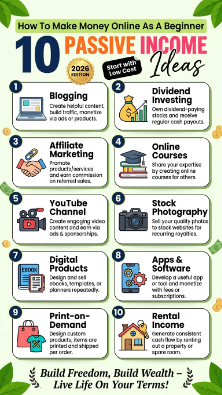
- Passive Income: Dividends from stocks, rental properties, or creating digital products (e-books, courses).
9. Protecting Your Assets: Insurance and Estate Planning
Building wealth is only half the battle; you also have to keep it. One lawsuit or major illness can wipe out years of hard work.
Essential Insurance Types
- Health Insurance: The #1 cause of bankruptcy in the US is medical debt. Never go without coverage.
- Term Life Insurance: If anyone depends on your income, you need life insurance. Avoid “Whole Life” policies; they are expensive and inefficient. Buy “Term” and invest the difference.
- Disability Insurance: You are more likely to become disabled during your working years than you are to die. Protect your ability to earn an income.
- Umbrella Insurance: Once your net worth exceeds $500,000, an umbrella policy provides extra liability protection.
Estate Planning
- Will: A legal document stating who gets your assets.
- Living Will/Healthcare Proxy: Directions for your care if you become incapacitated.
- Trusts: Advanced tools to avoid probate and manage how heirs receive money.
10. Tax Strategy: It’s Not What You Make, It’s What You Keep
Tax avoidance (legal) is different from tax evasion (illegal). Strategic planning can significantly boost your net worth.
Tax-Loss Harvesting
If you have investments that have lost value, you can sell them to “offset” the gains from other investments, reducing your total taxable income.
Capital Gains
Understand the difference between short-term (held less than a year) and long-term capital gains. Long-term rates are significantly lower, incentivizing long-term investing.
Deductions and Credits
- Standard Deduction: Most people take this.
- Itemized Deductions: If your mortgage interest, charitable giving, and state taxes exceed the standard deduction, itemizing can save you thousands.
11. Credit Scores: Mastering the Game
Your credit score is a “reputation score” for lenders. A high score (760+) gets you the lowest interest rates on mortgages and car loans.
Factors That Affect Your Score
- Payment History (35%): The most important factor. Never, ever miss a payment.
- Credit Utilization (30%): Keep your balances below 30% of your total limit.
- Length of Credit History (15%): Don’t close your oldest accounts.
- Credit Mix (10%): A mix of revolving (cards) and installment (loans) credit.
- New Credit (10%): Avoid opening too many accounts at once.
12. Raising Financially Literate Children
One of the greatest gifts you can give your children is the knowledge of how money works.
- The Three Jars: For young kids, use three jars labeled Spend, Save, and Give.
- Paid Chores: Teach them that money comes from work.
- Opening a Custodial IRA: If your teenager has a part-time job, you can open a Roth IRA for them, giving them a massive head start on retirement.
13. The 10 Commandments of Personal Finance
To summarize everything we’ve covered, here are the non-negotiable rules for financial success:
- Spend less than you earn. It is the only way to build wealth.
- Automate your finances. Set up automatic transfers to your savings and investment accounts the day you get paid.
- Avoid high-interest debt like the plague. Credit cards are tools, not extensions of your income.
- Invest early and often. Time in the market is better than timing the market.
- Maintain an emergency fund. Stay prepared so you don’t have to stay scared.
- Diversify your assets. Don’t put all your eggs in one basket (one stock, one house, one industry).
- Keep your big wins. When you get a raise, increase your investments before you increase your lifestyle.
- Educate yourself. Read one financial book per year to stay sharp.
- Ignore the “Joneses.” Comparison is the thief of joy and the killer of bank accounts.
- Focus on the long term. Wealth is built over decades, not days.
14. Common Financial Pitfalls to Avoid
Even the most disciplined people can fall into these traps:
The “I’ll Start Tomorrow” Trap
Procrastination is the most expensive mistake you can make. Every year you wait to start investing costs you tens of thousands in future growth.
Buying a New Car Every Few Years
A car is a depreciating asset. The average car payment is now over $700. If you invested that $700 a month instead of paying for a new SUV, you’d be a millionaire in 30 years. Buy used, pay cash when possible, and drive it until the wheels fall off.
Neglecting Your Health
Your health is your greatest wealth. Chronic illness caused by poor diet and lack of exercise is not only physically painful but incredibly expensive in terms of insurance premiums and medical bills.
15. Advanced Strategies: Taking it to the Next Level
Once you have the basics down, you can explore more sophisticated strategies:
Backdoor Roth IRA
If your income is too high to contribute to a Roth IRA directly, you can contribute to a Traditional IRA and then convert it to a Roth. (Consult a tax professional for this).
Real Estate Syndications
If you want to invest in real estate without being a landlord, syndications allow you to pool your money with other investors to buy large apartment complexes or commercial buildings.
Mega Backdoor Roth
Available in some 401(k) plans, this allows you to put up to $60,000+ per year into tax-advantaged accounts.
16. Frequently Asked Questions (FAQ)
Should I pay off my mortgage early?
It depends on your interest rate. If your mortgage is at 3% and the stock market returns 7-10%, you are mathematically better off investing. However, the psychological freedom of owning your home outright is priceless for many.
How much do I need to retire?
A common rule is the 25x Rule. Take your desired annual retirement income and multiply it by 25. If you want to live on $60,000 a year, you need $1.5 million.
Is gold or Bitcoin a good investment?
These are “speculative” assets. They don’t produce cash flow like a business or a rental property. Most experts recommend keeping these to less than 5% of your total portfolio.
How do I handle money with my spouse?
Communication is key. Have a “Money Date” once a month to review the budget, discuss goals, and ensure you are both on the same page. Transparency is the antidote to financial infidelity.
17. Conclusion: Your Journey Starts Now
Personal finance is a marathon, not a sprint. You will have months where you overspend, and you will have months where the market dips. The key is consistency.
Stop looking for the “get rich quick” scheme or the “hot stock tip.” Wealth is built through the boring, repetitive actions of budgeting, saving, and low-cost indexing.
Take one step today. Maybe it’s opening that HYSA, maybe it’s finally looking at your credit card statements, or maybe it’s increasing your 401(k) contribution by 1%. Whatever it is, do it now. Your future self will thank you for the discipline you show today.
Mastering your money isn’t just about the numbers in your bank account; it’s about the options those numbers provide. It’s about being able to leave a job you hate, travel to places you’ve dreamed of, and give generously to causes you believe in. You are now equipped with the knowledge—go out and build your legacy.