 admin
admin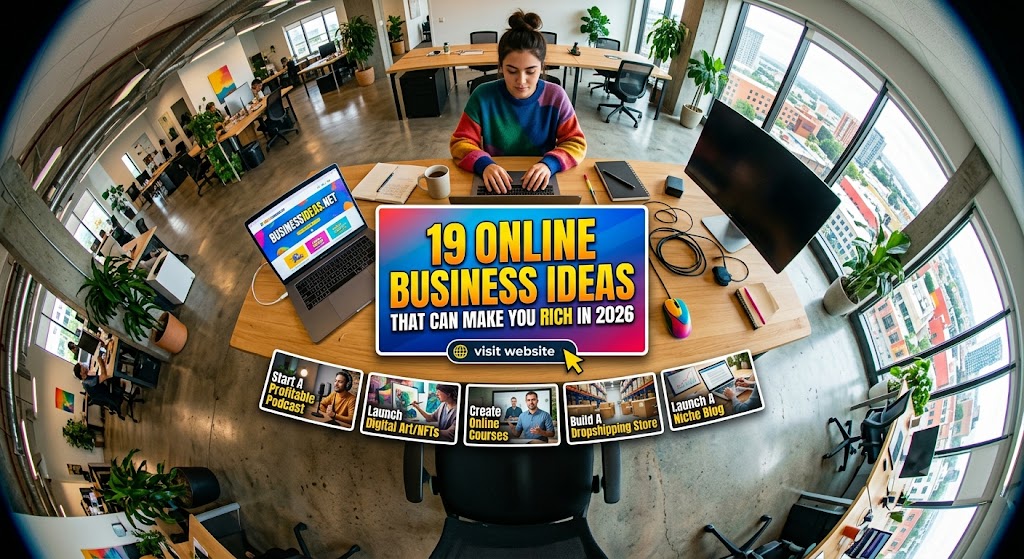
The Digital Frontier: 19 High-Leverage Online Business Ideas That Scale
The era of trading time for money is undergoing a radical transformation. In the traditional economy, if you wanted to double your income, you often had to double your hours. But in the digital economy, the rules are different. The internet provides what naval Ravikant calls “permissionless leverage”—the ability to reach millions of people through code and media without needing anyone’s approval.
Scalability is the holy grail of entrepreneurship. A scalable business is one where your revenue can grow exponentially while your costs and effort grow only linearly (or better yet, stay flat). If you are looking to build a venture that offers both financial freedom and time sovereignty, you need a model built on leverage.
Here are 19 online business ideas that possess the DNA of scalability.
1. SaaS (Software as a Service)
Software is the ultimate leverage. Once the code is written, the cost of adding a second, thousandth, or millionth user is near zero. SaaS businesses are highly valued because they generate recurring revenue and have high switching costs for users.
- The Strategy: Identify a repetitive, manual task that businesses perform daily and automate it. You don’t need to build the next Salesforce; “Micro-SaaS” tools that solve a single, specific problem (like a Shopify app for gift wrapping or a Chrome extension for LinkedIn prospecting) can generate six or seven figures with minimal overhead.
- Why it Scales: Low marginal costs and the ability to integrate with other platforms for distribution.
2. Niche Authority Content Sites
While “blogging” might sound old-school, authority sites are digital real estate. By creating high-quality, SEO-optimized content around a specific niche (e.g., backyard chickens, enterprise cybersecurity, or vegan bodybuilding), you attract “organic” traffic from Google.
19 Online Business Ideas That Can Make You Rich in 2026
Introduction
Starting an online business has never been easier—or more profitable. Whether you’re looking for a side hustle or aiming to build a full-time income, the right business model can grow with you. In this guide, you’ll discover 19 online business ideas that have real long-term potential and can scale into six- or even seven-figure ventures.
1. Start a Niche Blog
Build a blog around a specific topic such as personal finance, health, technology, or travel. Generate revenue through ads, affiliate marketing, sponsorships, and digital products.
2. Launch an Affiliate Marketing Website
Recommend products and services you trust, then earn commissions whenever someone makes a purchase through your referral links.
3. Sell Digital Products
Create and sell ebooks, templates, printables, stock photos, spreadsheets, or online tools. Digital products have low overhead and can generate passive income.
4. Create an Online Course
Package your expertise into a structured course. Teach skills like graphic design, coding, photography, or business and earn recurring revenue.
5. Start a YouTube Channel
Publish valuable videos consistently and monetize through advertising, sponsorships, affiliate marketing, and your own products.
6. Build a Print-on-Demand Store
Design custom T-shirts, hoodies, mugs, posters, and accessories without holding inventory. Suppliers handle printing and shipping.
7. Launch an E-commerce Brand
Sell physical products through your own website using dropshipping, private labeling, or inventory management.
8. Offer Freelance Services
Turn your skills in writing, programming, design, marketing, or video editing into a profitable freelance business.
9. Start a Digital Marketing Agency
Help businesses with SEO, paid advertising, social media, email marketing, or content creation while growing a team over time.
10. Develop a SaaS Product
Create software that solves a recurring problem and charge customers a monthly or annual subscription.
11. Sell AI-Powered Services
Offer AI content creation, automation setup, chatbot implementation, or AI consulting for businesses.
12. Become a Social Media Manager
Manage social media accounts for brands by creating content, scheduling posts, and increasing engagement.
13. Build a Membership Website
Create exclusive content, community access, or premium resources behind a monthly subscription.
14. Start a Podcast
Share valuable conversations and monetize through sponsorships, affiliate partnerships, premium episodes, and merchandise.
15. Create a Newsletter Business
Grow an email audience around a niche topic and earn income from sponsorships, paid subscriptions, and affiliate promotions.
16. Sell Stock Content
Upload photos, videos, illustrations, music, or sound effects to marketplaces and earn royalties on every download.
17. Build Mobile Apps
Develop useful apps for Android and iOS that generate revenue through subscriptions, ads, or in-app purchases.
18. Offer Virtual Assistant Services
Help entrepreneurs with administrative tasks, customer support, scheduling, research, and business operations remotely.
19. Build an Online Coaching Business
Provide one-on-one coaching or group programs in areas like fitness, business, career development, finance, or personal growth.
Final Thoughts
The best online businesses are those that can grow without requiring your time to increase at the same rate as your income. Choose one idea that matches your skills and interests, stay consistent, and focus on delivering value. With patience and the right strategy, today’s small online business can become tomorrow’s thriving digital brand.
3. High-Ticket Online Courses
Education is shifting from institutional to individual. If you have a skill that helps people make money, save time, or improve their health, you can package that knowledge into a video course.
- The Strategy: Focus on “transformational” results rather than just information. Instead of “How to use Excel,” sell “Financial Modeling for Investment Bankers.” High-ticket courses ($500 – $2,000) allow you to spend more on customer acquisition while maintaining high margins.
- Why it Scales: You record the content once. Whether ten people watch it or ten thousand, your workload remains the same.
4. Paid Newsletters
With the rise of platforms like Substack and Beehiiv, the newsletter has become a powerhouse business model. It’s an “owned” audience that doesn’t depend on social media algorithms.
- The Strategy: Provide curated insights, deep-dive analysis, or “insider” data that isn’t easily found for free.
- Why it Scales: The unit economics are incredible. A newsletter with 10,000 paying subscribers at $10/month is a $1.2 million a year business with virtually no inventory or shipping costs.
5. YouTube Content & AdSense
YouTube is the world’s second-largest search engine. It’s a platform where your “employees” (your videos) work for you every second of the day, all over the world.
- The Strategy: Focus on “Searchable” content (tutorials, reviews) and “Viral” content (storytelling, challenges). As your library grows, your older videos continue to generate passive ad revenue and leads.
- Why it Scales: The YouTube algorithm acts as a free global marketing team, pushing your content to interested viewers.
6. Productized Services
A service business (like graphic design or copywriting) usually fails to scale because it’s tied to the founder’s time. A productized service turns that labor into a fixed “package” with a set price and a standardized delivery process.
- The Strategy: Instead of “General Marketing Consulting,” offer “4 SEO-optimized blog posts per month for $1,500.”
- Why it Scales: Standardization allows you to hire and train others to perform the work. You stop selling hours and start selling outcomes.
7. Amazon FBA (Private Label)
Amazon provides the infrastructure; you provide the product. With Fulfillment by Amazon (FBA), you send your inventory to Amazon’s warehouses, and they handle the shipping, returns, and customer service.
- The Strategy: Find a product with high demand and low-quality competition on Amazon. Rebrand it, improve the packaging, and use Amazon’s massive internal traffic to drive sales.
- Why it Scales: You are leveraging the most efficient logistics machine on the planet.
8. High-Ticket Dropshipping
Forget selling $20 phone cases from China with 3-week shipping times. High-ticket dropshipping involves partnering with domestic brands to sell expensive items ($1,000+) like infrared saunas, standing desks, or commercial kitchen equipment.
- The Strategy: Build a premium web store and run targeted Google Shopping ads. Since the items are expensive, a single sale can net you $200–$500 in profit.
- Why it Scales: You don’t hold inventory. You focus entirely on customer acquisition and brand building.
9. Membership Communities
People come for the content but stay for the community. A paid membership site (using platforms like Circle, Skool, or Mighty Networks) provides recurring revenue and builds a “moat” around your business.
- The Strategy: Create a space where like-minded individuals can network, share resources, and get direct access to experts.
- Why it Scales: In a well-run community, the members provide much of the value to each other. As it grows, the network effect makes the community more valuable, not less.
10. AI-Powered Tools & Wrappers
The AI revolution has opened a massive window for “wrappers”—applications that use APIs (like OpenAI’s GPT-4) to solve specific workflow problems for niche audiences.
- The Strategy: Create an AI tool for a specific profession. For example, “AI for Real Estate Listings” or “AI for Legal Contract Summarization.”
- Why it Scales: You are leveraging billions of dollars of R&D from AI companies to build a high-utility tool with a small team.
11. Affiliate Marketing Ecosystems
This involves building a platform that helps consumers make purchasing decisions. Think of sites like The Wirecutter or NerdWallet.
- The Strategy: Create comparison tables, “Best of” lists, and deep-dive reviews. You earn a commission every time someone clicks your link and buys.
- Why it Scales: You don’t have to deal with manufacturing, shipping, or customer support. Your only job is to generate high-intent traffic.
12. Digital Templates and Assets
The “Creator Economy” needs tools. Designers need UI kits, YouTubers need video overlays, and businesses need Notion templates or Excel dashboards.
- The Strategy: Build a “shop” on your own site or platforms like Etsy and Creative Market.
- Why it Scales: Digital files can be downloaded an infinite number of times. It’s the ultimate “build once, sell forever” model.
13. Lead Generation for Local Businesses
Many local businesses (plumbers, lawyers, roofers) are great at their jobs but terrible at digital marketing. You can build “bridge” websites that capture leads and sell them to these businesses.
- The Strategy: Rank a website for “Emergency Plumber in [City]” and set up a tracking phone number. Every time a lead calls, you charge the plumber a flat fee.
- Why it Scales: Once the site ranks, it requires very little maintenance. You can replicate this model across hundreds of different cities and niches.
14. Stock Media Portfolio
If you are a photographer or videographer, your hard drive is a gold mine.
- The Strategy: Upload high-quality b-roll, drone footage, or specialized photography to sites like Shutterstock, Adobe Stock, or Pond5.
- Why it Scales: One high-quality clip of a “Business meeting in a modern office” can be licensed thousands of times over a decade.
15. E-book Publishing (Amazon KDP)
Self-publishing has removed the gatekeepers. You can write books (or hire ghostwriters) and publish them directly to the Kindle store.
- The Strategy: Target “starving niches”—topics where people are desperate for information but existing books are outdated or poorly written.
- Why it Scales: Amazon’s recommendation engine does the selling for you. A portfolio of 20-30 books can create a massive passive income stream.
16. Podcast Networks
Podcasting is a relationship-driven medium. While individual podcasts are great, a network of podcasts is a scalable business.
- The Strategy: Start a podcast in a specific niche. Once it’s successful, help others launch podcasts under your brand name in exchange for a percentage of their ad revenue and sponsorship deals.
- Why it Scales: You leverage your brand and sales team to monetize multiple shows simultaneously.
17. Niche Job Boards
In a world of “noise” on LinkedIn and Indeed, specialized job boards are becoming more valuable for recruiters.
- The Strategy: Build a job board for a very specific niche (e.g., “Remote Rust Developers” or “Sustainability Executives”). Charge companies to post featured listings.
- Why it Scales: As your site becomes the “go-to” place for a certain type of talent, companies will pay a premium to be seen there. It’s a low-maintenance, high-margin model.
18. White-Label Software Reselling
Many SaaS companies allow you to “white label” their platform. This means you can put your brand on their software and sell it as your own.
- The Strategy: Use a platform like GoHighLevel. Customize it for a specific industry (like dental practices), add your own training and support, and charge a monthly subscription.
- Why it Scales: You get the benefits of owning a SaaS business without the massive cost of developing and maintaining the code yourself.
19. Managed Services for Creators
The “Creator Economy” is booming, but most creators are overwhelmed by the backend of their business.
- The Strategy: Offer a managed service like “Short-form Video Editing for YouTubers” or “Podcast Management.”
- Why it Scales: By hiring a team of specialized editors and managers, you can take on dozens of clients. Since the demand for content is infinite, the need for these services is skyrocketing.
The Three Pillars of Scaling an Online Business
Choosing an idea is only the first step. To truly scale, you must implement the three pillars of digital leverage:
I. Systems and Automation
If your business requires you to be involved in every transaction, you don’t have a business; you have a job. Scaling requires you to document every process (Standard Operating Procedures) and use tools like Zapier or Make.com to automate repetitive tasks. Automation doesn’t sleep and it doesn’t make mistakes.
II. Delegation and Outsourcing
The goal is to move from “Operator” to “Owner.” This means hiring Virtual Assistants (VAs), specialized freelancers, or full-time employees to handle the day-to-day. Your time should be spent on high-leverage activities like strategy, partnerships, and product development.
III. The Power of Compounding
Online businesses often follow a “J-curve.” For the first few months, you might see very little growth despite immense effort. However, as SEO kicks in, your email list grows, and your brand authority builds, growth becomes exponential. The key to scaling is staying in the game long enough for the compounding effects to take over.
Conclusion: Start Small, Think Global
The most successful online entrepreneurs didn’t start with a multi-million dollar vision. They started by solving a small problem for a specific group of people. The beauty of the internet is that “small” niches are actually massive when you have a global audience.
Whether you choose to build software, create media, or sell products, the formula remains the same: Find a way to provide value that doesn’t depend on your physical presence. That is the path to building a business that doesn’t just pay your bills, but gives you back your life.