 admin
admin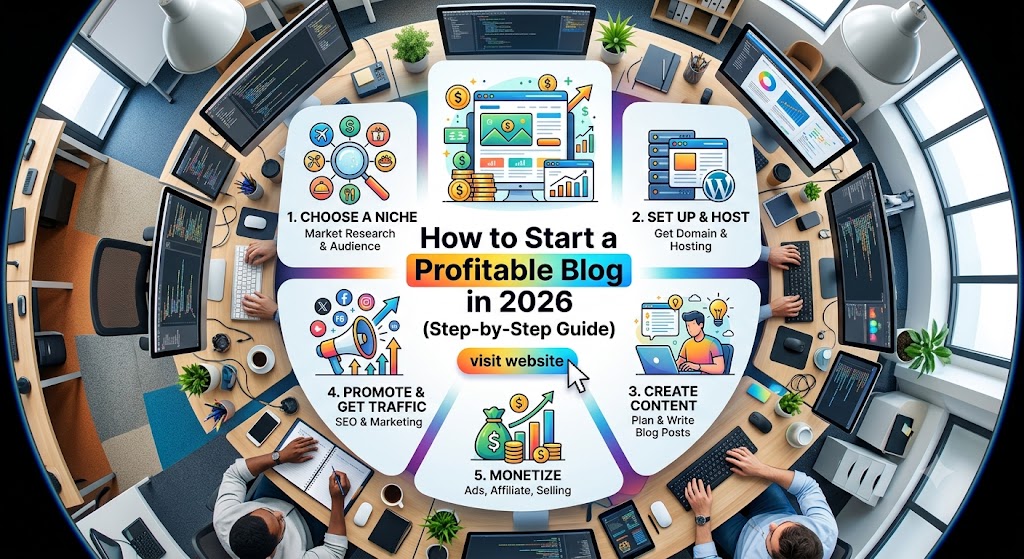
How to Start a Blog That Makes Money in 2026
The landscape of digital entrepreneurship has shifted dramatically. If you are looking back at blogging advice from 2020 or even 2023, you are looking at a roadmap for a world that no longer exists. By 2026, the integration of Artificial Intelligence (AI) in search engines, the evolution of the “Creator Economy,” and the shift toward “Personal Brand Authority” have fundamentally changed how blogs generate revenue.
Blogging is no longer just about writing articles and slapping on some display ads. In 2026, a successful blog is a multi-channel media brand. This guide will walk you through the exact, high-level strategy required to build a profitable blog from scratch in the current digital climate.
Phase 1: The 2026 Niche Selection – Finding Your “Information Gain”
In the era of AI-generated content, generic information is a commodity. If your blog simply repeats what is already on Wikipedia or other top-ranking sites, you will fail. To make money in 2026, you must provide Information Gain.
1. The Death of the “Generalist” Blog
Google’s Search Generative Experience (SGE) and other AI search tools now answer basic questions (“How to boil an egg” or “Best time to visit Paris”) directly in the search results. To survive, you must niche down into areas where human experience, nuance, and experimentation are required.
2. High-Value Niche Categories for 2026
- The “Human-Centric” Tech: Ethical AI use for small businesses, privacy-first smart home setups, or sustainable bio-hacking.
- The “New Economy”: Fractional C-suite advice, remote work tax law for nomads, or micro-SaaS development for non-coders.
- Hyper-Local Adventures: Not just “Travel to Japan,” but “Biking the rural backroads of Hokkaido for under $50 a day.”
- The “Anti-Algorithm” Lifestyle: Digital minimalism, slow living, and homesteading in urban environments.
3. The “Profitability Audit”
Before committing, ensure your niche meets three criteria:
- High Ticket Potential: Are there products or services in this niche costing $500+?
- Community Drive: Is this a topic people feel passionate enough about to join a newsletter or a Discord?
- Affiliate Depth: Are there recurring subscription softwares (SaaS) or high-quality physical goods to recommend?
Phase 2: Technical Infrastructure – Speed, Security, and Core Web Vitals
In 2026, user experience (UX) is a primary ranking factor. If your site takes more than 1.5 seconds to load, you’ve lost 50% of your mobile traffic.
1. The Platform: Why WordPress Still Reigns
While platforms like Substack and Ghost are popular for newsletters, Self-Hosted WordPress (WordPress.org) remains the king for monetization. It offers the best SEO plugins, customizability, and ownership of your data.
2. Hosting in the Cloud
Ditch the $3/month shared hosting. For a blog intended to make money, use Cloud Hosting (like Kinsta, WP Engine, or high-tier SiteGround plans). Look for:
- HTTP/3 Support: The latest protocol for speed.
- Edge Caching: Delivers your site from the nearest global server.
- Daily Backups: Non-negotiable for security.
- . Choose a Profitable Blog Niche
- Pick a niche with strong demand and multiple monetization opportunities. Topics like personal finance, technology, health, travel, food, and digital marketing continue to attract large audiences.
- 2. Research Your Target Audience
- Understand who you’re writing for. Identify their biggest questions, challenges, and goals so you can create content that solves real problems.
- 3. Pick the Right Blogging Platform
- Use a reliable platform like WordPress for maximum flexibility, customization, and long-term growth. Choose a memorable domain name and dependable hosting.
- 4. Set Up Your Blog Professionally
- Install a clean, mobile-friendly theme, create essential pages (About, Contact, Privacy Policy), and optimize your site for speed and security.
- 5. Create High-Quality Content
- Publish helpful, original, and well-structured articles that answer readers’ questions better than competing websites.
- 6. Learn the Basics of SEO
- Optimize every post with keyword research, compelling titles, meta descriptions, internal links, and fast-loading pages to improve Google rankings.
- 7. Build an Email List Early
- Offer a free resource such as a checklist or ebook to encourage visitors to subscribe. Email marketing helps you build loyal readers and repeat traffic.
- 8. Promote Your Content
- Share your posts on Pinterest, Facebook, LinkedIn, X, and relevant online communities. Consistent promotion accelerates traffic growth.
- 9. Monetize Your Blog
- Generate income through affiliate marketing, display ads, sponsored posts, digital products, online courses, memberships, and freelance services.
- 10. Track Performance and Improve
- Use analytics tools to monitor traffic, rankings, and conversions. Update older articles regularly to maintain and increase search visibility.
- 11. Stay Consistent
- Successful blogs are built over time. Publish valuable content consistently and focus on long-term growth rather than quick results.
- 12. Scale Your Blogging Business
- As your audience grows, outsource repetitive tasks, expand into new content formats, and diversify your income streams to build a sustainable online business.
Phase 3: The Content Strategy – Beyond Keywords to “Topic Authority”
In 2026, “Keyword Research” has evolved into “Topic Modeling.” You don’t just want to rank for a word; you want to be the “Entity” that search engines associate with a specific subject.
1. Implementing the Pillar-Cluster Model
Organize your blog into “Content Hubs.”
- Pillar Page: A comprehensive guide to a broad topic (e.g., “The Ultimate Guide to Sustainable Gardening”).
- Cluster Content: 10-20 specific articles that link back to the pillar (e.g., “Best Organic Fertilizers,” “How to Store Rainwater,” “Pest Control for Heirloom Tomatoes”).
2. The E-E-A-T Framework
Google uses Experience, Expertise, Authoritativeness, and Trustworthiness to rank content.
- Experience: Use “I” and “Me.” Show photos of you actually doing the thing.
- Expertise: Link to your credentials or cite peer-reviewed sources.
- Authoritativeness: Get mentioned by other experts in your field.
- Trustworthiness: Have clear contact info, an “About Us” page that shows real humans, and transparent affiliate disclosures.
3. AI-Assisted, Not AI-Generated
Use AI (like Claude 4 or GPT-5) to:
- Generate outlines.
- Brainstorm headlines.
- Summarize research papers.
- Identify content gaps. Never copy-paste AI output directly. In 2026, AI-detected patterns are penalized if they lack human “soul,” personal anecdotes, and unique insights.
Phase 4: Multichannel Traffic Generation
Relying solely on Google Search in 2026 is risky. A profitable blog uses a “diversified traffic portfolio.”
1. Search-Inside-Social (The New SEO)
People are increasingly searching on TikTok, YouTube, and Pinterest instead of Google.
- Pinterest: Create “Idea Pins” that drive traffic to your long-form articles.
- YouTube: Embed a video version of your blog post within the article to increase “Time on Page.”
2. The Power of the “Dark Social”
Dark social refers to links shared in private messages, Slack, and Discord. Create content that is “bookmarkable” and “shareable” in private communities:
- Original data/surveys.
- Controversial (but well-reasoned) opinion pieces.
- Free tools or templates (calculators, checklists).
3. Email: Your Only Owned Asset
Social media algorithms can change. Your email list is your insurance policy.
- The Lead Magnet: Offer a high-value PDF, a mini-course, or a “secret” resource library in exchange for an email.
- The Weekly Pulse: Send a newsletter that provides value beyond just links to your new posts. Build a relationship.
Phase 5: Monetization Architectures for 2026
The era of “pennies from Adsense” is over for small-to-mid-sized blogs. To make real money, you need a multi-layered monetization strategy.
1. Affiliate Marketing 2.0 (The Trust Model)
Stop promoting everything. Focus on “Deep Integrations.”
- High-Ticket Affiliates: Promote products that pay $100+ per sale.
- Recurring Commissions: Promote software with monthly subscriptions.
- Direct Brand Deals: As you grow, bypass affiliate networks (like Amazon) and negotiate direct deals with companies for higher percentages.
2. Digital Products (The “Business of One”)
Your blog proves you are an expert. Sell that expertise.
- Micro-Courses: 60-minute deep dives into one specific problem.
- Workshops: Live Q&A sessions or intensive cohorts.
- Paid Newsletters: Use platforms like Substack or Memberful to offer premium content for a monthly fee.
3. The Service Ladder
A blog is the best “Top of Funnel” for high-priced services.
- Consulting: One-on-one sessions.
- Done-For-You Services: If you blog about SEO, sell SEO services.
- Speaking Engagements: Use your blog as a portfolio to get invited to conferences.
4. High-Tier Display Ads
Once you hit 50,000+ sessions per month, join premium ad networks like Raptive or Mediavine. These networks use advanced AI to place ads that don’t ruin the user experience and pay significantly more than Google Adsense.
Phase 6: Scaling and Automation
To transition from a “blogger” to a “business owner,” you must stop doing everything yourself.
1. Building a “Ghost” Team
By 2026, you can hire specialized freelancers or use AI agents to handle:
- Formatting and Uploading: Virtual Assistants (VAs).
- Graphic Design: Using tools like Midjourney or Canva Pro.
- Distribution: Automating your social media posts using tools like Buffer or Hootsuite.
2. Updating the “Archives”
In 2026, Content Maintenance > Content Creation. Spend 30% of your time updating old posts. Refresh the data, check for broken links, and update the “Year” in the title. Google loves “freshness.”
3. Conversion Rate Optimization (CRO)
Use heatmaps (like Hotjar) to see where people are clicking. Small changes to the color of your “Buy Now” button or the wording of your email opt-in can double your income without increasing your traffic.
Phase 7: The “Exit Strategy” – Thinking Like an Investor
A blog is an asset. In 2026, profitable blogs are being bought and sold for 3x to 5x their annual profit.
- Clean Books: Keep your business finances separate from personal ones from day one.
- SOPs (Standard Operating Procedures): Document how you run the blog so someone else could take it over.
- Valuation: If your blog makes $5,000 profit a month, it could be worth $180,000 to $300,000 on marketplaces like Empire Flippers or Flippa.
Summary Checklist for 2026 Success
- Select a Niche with “Information Gain” and high-ticket potential.
- Set up Cloud Hosting and a mobile-first, lightweight WordPress theme.
- Produce “Human+” Content that focuses on the E-E-A-T framework.
- Distribute across platforms (YouTube, Pinterest, TikTok) to funnel traffic back to your site.
- Build an Email List immediately. It is your most valuable asset.
- Monetize through a mix of high-ticket affiliates, digital products, and premium ads.
- Treat your blog as a business, focusing on data, scaling, and eventual exit value.
The barrier to entry for blogging is lower than ever, but the barrier to profitability is higher. By focusing on authenticity, user experience, and diversified revenue, you can build a blog in 2026 that not only replaces your 9-to-5 income but creates long-term wealth.
The secret is no longer just “writing.” It’s building an ecosystem. Start today; the best time to build your digital real estate was ten years ago, but the second best time is right now.